Musikk // Music
Erhu studio.
Play, record, and render a melody.
A sound study under development. About this sound
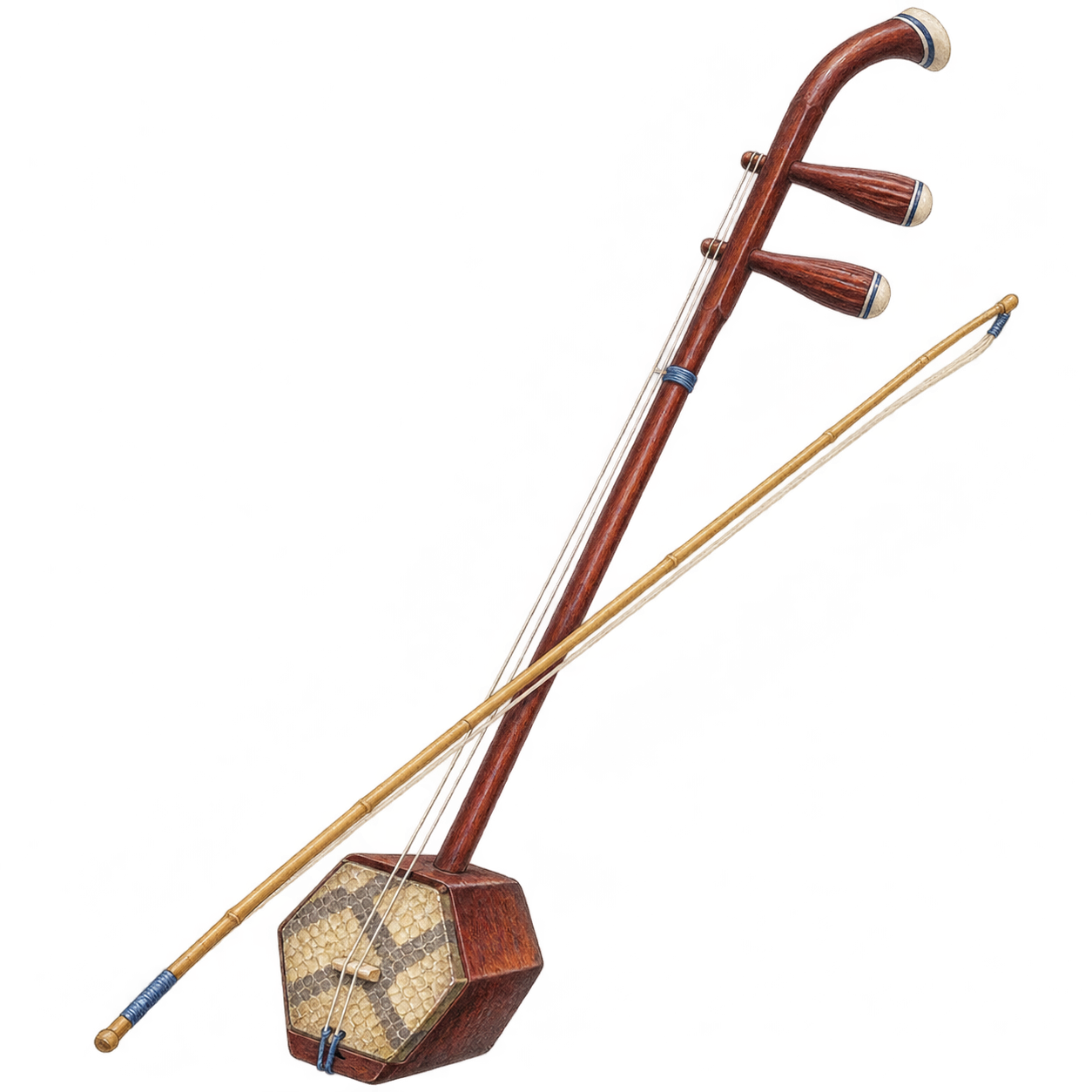
Solo erhu
Live keys preview vibrato and short slides. Render the take for full-phrase dynamics and expression.
River Lanterns
Render once to compare both versions.
Play with the keys below or your computer keyboard.
—About this sound
Hchu is an experimental virtual erhu for a web browser. The erhu is a Chinese bowed instrument with two strings, capable of sustained tones, vibrato and slides. The project explores how a melody entered on a keyboard can be turned into a more expressive performance.
Keyboard input supplies note pitches and timings. Recording a melody makes the whole phrase available for rendering, including neighbouring notes and rests. The current sound engine uses a small trained model to rebuild recorded erhu notes from stored numerical descriptions. Loops sustain the notes and short crossfades join them, so the source recordings still strongly influence the result.
A second, small model predicts loudness changes and the softness of note connections. Vibrato, slides, gentle pitch approaches at note starts, and small bow-pressure and tone changes currently come from programmed rules. Learning these gestures reliably remains a development goal.
More advanced training material would include expressive phrases recorded by experienced erhu players under consistent recording conditions. The same melody could be performed at several speeds and dynamic levels, with varied bowing, vibrato, slides, ornaments and phrase endings. Such recordings would provide examples of how these choices work together across a phrase.
Each performance would need an accurate link between the intended notes and the recorded sound. A useful training set would capture how pitch, loudness and tone change throughout the performance, alongside the note timings. Labels for bow direction, string choice and whether notes are smoothly joined or separately bowed could add further information. Expert review of the labels would help separate intentional expression from transcription errors.
With suitable material and models, a performance system could learn when vibrato enters, how its depth and speed develop, which notes connect through a slide, and how a phrase grows and settles. Repeated recordings of the same melody could support several plausible interpretations. A richer sound model could then follow those changing controls to generate a continuously evolving tone. These remain possibilities for a future version of Hchu.
Progress depends on recording quality, musical variety, reliable labels and permission to use the material. Evaluation would need unfamiliar melodies, recordings held out from training, and listening comparisons involving erhu players. A larger collection alone would not establish convincing musical phrasing.
Sound generation currently runs locally in the browser, and recorded melodies stay on the device. Live playing uses the available note history; rendered playback can use the complete phrase. A later instrument plug-in could bring the same workflow into music-production software.